What we're missing, and what to make for millions of sites
IMAGE-BRAIN, 8 Oct 2026. Checked against all 7,789 images (every one reviewed by eye) and the slots the SISO site kit actually renders.
1. Is what we have usable? Slot by slot
| Slot | Verdict | Why |
|---|---|---|
| Hero (16:9 and 9:16) | usable | Calm zone for the headline, crops to phone. 1,310 wide and 1,033 tall. |
| Cards (4:5) | usable | 1,007, subject centred, crop-safe. |
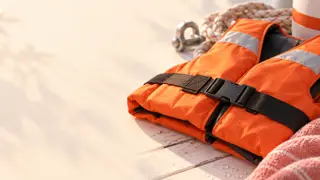
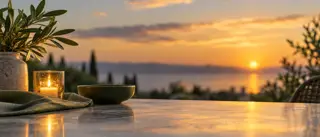
| Every site looks the same | problem | One photographer's look everywhere: warm golden still life with leaf shadow on plaster. 12 palettes are not 12 styles. A barber, a bank and a bakery would feel identical. |
| Footer grounds | failed | 40 made, 33 cut, 1 keep. Bands (21:9) exist but are busy table strips, too much detail behind footer text. |
| Side nav / tall sidebar (1:3, 1:4) | none | Zero images in these shapes. |
| Icons | don't generate | The kit's icons are animated vector icons from a library; image gen makes blurry, inconsistent icons. Use gen for spot illustrations instead (empty states, how it works, booking confirmed, 404). We have 50. |
| Logos / marks | food only | 748 for food and drink, 97 booking, 0 retail, 0 consult, 7 trades. |
| Menu item photos | almost none | 116 drinks and banh mi. Restaurants need a photo per dish; menu is the biggest module (117k no-site businesses). |
| Retail product shots | none | Catalogue sites (848 industries) have no product-on-colour shots for the "plate" hero or product grid. |
| Collage / fan / stack heroes | food only | These hero forms need 3–5 frames of one scene. Only food has true sets. |
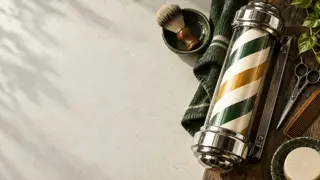
| Same subject 30 times | problem | IMAGE-BANK's 30-shot industry sets are one object repeated (barber pole, dental chair, dumbbells, latte and croissant). 452 marked maybe. |
Evidence: eight different modules, one look
 16:9
16:9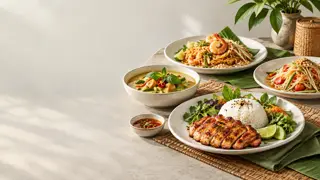 16:9
16:9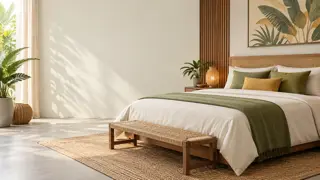 16:9
16:9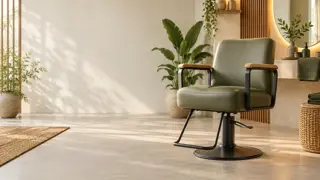 16:9
16:9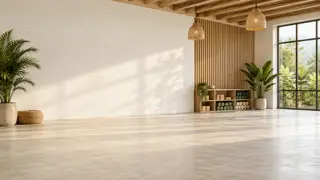 16:9
16:9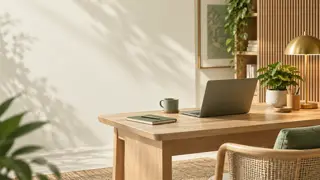 16:9
16:9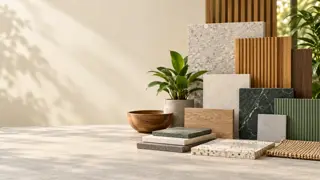 16:9
16:9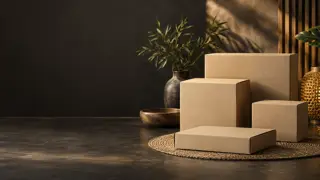 16:9
16:9Evidence: the barber set (30 of these)
 16:9
16:9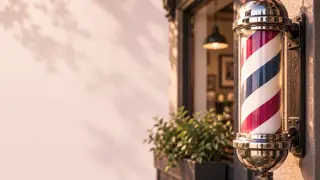 16:9
16:9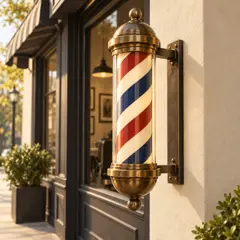 1:1
1:1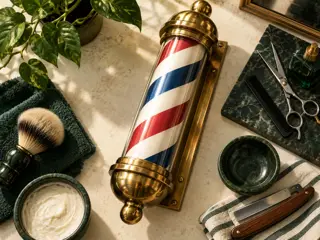 4:3
4:3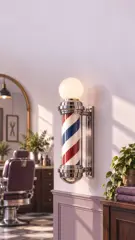 9:16
9:16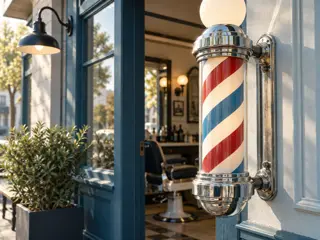 4:3
4:3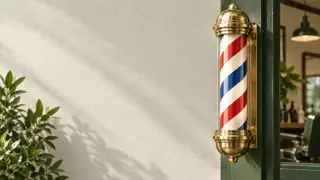 16:9
16:9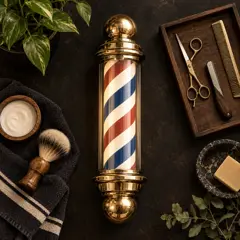 1:1
1:1Evidence: the footer pool after review
 21:9
21:9 21:9
21:9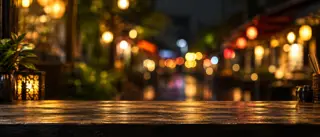 21:9
21:9 21:9
21:9 21:9
21:9 21:9
21:9 21:9
21:9 21:9
21:92. Is it every industry, in every city?
- Our list is the full Google business-category list (3,665), but the "covered" maths weights by four cities (Da Nang, Ho Chi Minh, Bangkok, London). 3,078 of the 3,665 categories have no businesses measured in those four cities, so a global sweep needs its own weighting.
- Most of the 1,966 "generic only" industries are this global long tail. They need about 80 new families (e.g. funeral, religious, government office, kids' play, music retail, marine, agriculture supply).
- Everything is styled South-East-Asian or placeless. A London barber, a New York dispensary and a Dubai salon need different interiors and street context.
- Regulated shops: Cannabis store, Smoke shop, Liquor store and Tobacco shop are in the list. We have 94 dispensary images, all marked private-review-only. They need public-safe sets: no consumption, no product claims, no minors.
3. The deeper answer: make parts, not pictures
The goal is millions of sites. Three facts follow from that:
- Finished pictures run out. Bangkok alone has 19,500 restaurants with no site. With 100 restaurant heroes, every hero sits on about 200 sites in one city, so neighbours share heroes. A picture library can't scale to millions; a parts library assembled differently for each site can.
- Colour should be applied when the site is built, not when the image is generated. Most of our breadth sets are the same picture in 12 palettes. Instead, make backgrounds, patterns and footers in neutral tones and tint them in the browser to each site's palette. That's one image for unlimited palettes, and the Codex goes to new subjects.
- Honesty and trust. A photoreal salon interior that isn't their salon misleads customers. Real trust comes from their own Google photos. Our images should be the stage around those photos: grounds, objects, illustrations, frames and light. Use photoreal for objects and dishes, and stylised art for whole scenes.
The highest-value asset is the industry object library. Each industry is recognisable from about 25 objects (barber: pole, clippers, straight razor, chair, comb, hot towel, mirror…). Generate each object alone on a plain ground so its background can be cut away, in two or three styles. One library then feeds:
- heroes composed per site: tinted ground + 3 objects + layout + light overlay, which gives thousands of combinations per industry and a different image file on every site
- menu dishes and retail products, which are just objects
- wallpaper patterns repeated from the objects
- spot illustrations, section dividers and favicons
- game tiles: memory-match cards, falling items, wheel segments
- animation pieces that fly in on scroll
About 130 families × 25 objects × 2 styles is roughly 6,500 shots for every industry worldwide. That's why it's the global sweep.
4. "The whole image is a site": scroll canvases
- One continuous illustrated scene runs down the whole page: for example sky and street → storefront → inside → counter → footer ground. The HTML text sits in the calm zones.
- It's made as 4 stacked sections: 16:9 for desktop and 9:16 for phones. Each section fades to the same ground colour at its top and bottom edges, so they stack seamlessly even though each is generated separately.
- This is the most distinctive kind of site we could ship; no template shop has it. The pilot tests it on a coffee shop, a barber and a hotel, on both desktop and phone.
- It can also serve as a design target: render a whole-page mockup and have the kit copy its layout. That's a separate use and would never ship as the site itself.
5. Animations and games without video
| Effect | What the bank supplies | What code does |
|---|---|---|
| Parallax depth on scroll | Each scene as 3 layers: back, middle and front, with the front ones on plain ground so their background can be cut away | Layers move at different speeds |
| 2.5D tilt on any photo, including the business's own | Nothing: a depth model (Depth Anything) makes a depth map at build time | WebGL tilts it with the phone's gyroscope or the mouse |
| Day → night, closed → open, empty → busy | Twin images of the same scene | Cross-fade on scroll or by the time of day |
| Steam, water, leaves moving | A still image plus a mask | Shader displacement, so it plays like a cinemagraph |
| Objects flying in, falling, stacking | The object library | Scroll-triggered motion |
| Icons | Nothing | The kit's animated icon library (already wired) |
| Real video loops | A hero still | Image-to-video (Veo or Kling). It costs money outside Codex, so only for paying clients |
Games: image gen can't draw the same character consistently frame after frame, so the game mechanics are code templates and the bank fills their art slots. The templates are spin-the-wheel, scratch card, memory match, catch-the-falling-item, slide puzzle and stamp card. The art slots are wheel face, scratch foil, card back, background, prize icons, and the object library as game pieces. For example, a bakery's memory match uses its croissants and a barber's uses its combs. We already have 112 game assets and 141 prize icons.
6. The plan
| # | Wave | Shots | Why |
|---|---|---|---|
| 6 | Industry gap fill (written; waiting on IMAGE-BANK's intake) | 771 | Missing roles in 88 industries and families |
| P | Pilot, runs first: scroll canvases for 3 industries (desktop and phone), 40 objects for cut-out (in two styles), parallax layers, 10 neutral grounds to tint, day/night twins, game art | 96 | Tests every risky idea before we spend thousands of shots |
| 7 | Object library, two styles: photo-clean and flat illustration (top 130 families × 25) | 6,500 | Unlimited distinct heroes, menus, products, patterns, games and motion for every industry worldwide |
| 8 | Scroll canvases: 8 modules × 6 looks × 8 sections | 384 | Sites no template shop has |
| 9 | Neutral decor to tint: footers, sidebars, dividers and share-card grounds | 300 | The slots that failed or have nothing |
| 10 | Six art directions as sets | 384 | Every site looking the same |
| 11 | Marks for the 7 non-food modules, regional street and room context (6 regions), festival grounds to tint, regulated shops | 750 | Logos, the rest of the world, campaigns, dispensaries |
After the pilot lands I'll build one working demo site per pilot industry (phone and desktop): canvas scroll, parallax, tinted footer, day/night fade and a memory-match game made from the objects. It goes at /lab on this site, and the next waves follow whatever survives.